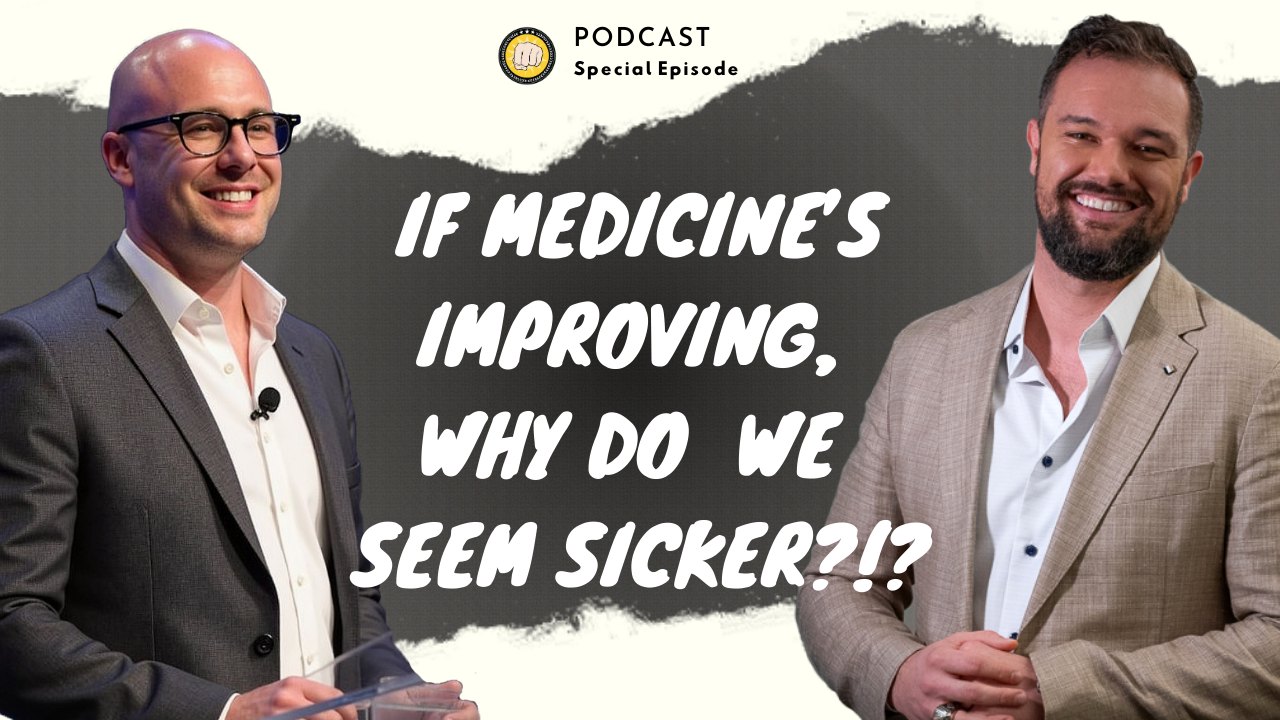
Medicine's 'Improving'... yet our health's failing
The lie we’ve all absorbed: “To make healthcare cheaper, it has to be worse”
We’ve been trained to believe cost reduction means coverage reduction.
But in practice, there are cases where smarter design improves the experience and lowers costs—because it targets the real drivers of spending: chronic disease, unmanaged conditions, and avoidable high-cost events.
Jack used a “Lego bricks” analogy: with employer benefits, you can assemble a plan using components—solutions most people have never heard of—that can be added without raising cost unless used.
Here’s why that matters:
The hidden world of solutions most people don’t know exist
Jack shared an example that captures the point: there are services that can improve outcomes dramatically (even life-or-death outcomes), and sometimes cost a plan nothing unless someone uses them.
Note why thats "future cost" is important... if they're being used, you again don't care much about the price as they're designed to save on the downstream cost - reduce the cost of the coverage you now need to provide to your employees through you company plan.
Most employees and even many employers never hear about these options because the market is loud, confusing, and dominated by incumbents.
So the average person thinks their choices are:
- pay more for a name-brand plan, or
- pay less and “hope for the best.”
That’s a false binary.
The bigger unlock: staying out of the system as much as possible
Even the best plan in the world is still dealing with the aftermath.
If you want a better life, you don’t start with “what’s my deductible.”
You start with how do I reduce the odds I need the system in the first place.
Curtis tied it to something personal: watching family members ignore the basic cause-and-effect of things like too much sugar, tobacco, alcohol - AKA, poor health habits - until it ended with what could have been a preventable illness.
That’s the part nobody wants to hear, but everyone needs to.
Comfort is not neutral
Modern life is comfortable in ways we all weren’t built for: constant food availability, ultra-processed ingredients, endless scrolling, low movement, high stress, low sleep.
Comfort feels harmless. Over time, it becomes expensive and weighs on your ability to do just about everything.
The “boring” health strategy that beats 95% of people
You don’t need extreme programs to improve health.
The conversation kept circling back to simple, sustainable habits:
- Walk consistently
- Reduce sugar
- Eat more whole foods
- Avoid foods with long ingredient lists
- Do a manageable exercise routine weekly
- Stop trying to sprint your way into a new body
Curtis nailed it: if you can exercise a bit each week and eat “relatively healthy” (even in just two key areas), you’re ahead of most people.
Jack added the behavior truth: most people fail because they choose an identity makeover instead of a habit.
They go from “I’m out of shape” to “I’m doing P90X plus a juice cleanse.”
Then they crash, rebound, feel sad and get worse.
“Do something that sucks every day”
This wasn’t framed as macho motivation—it was framed as a mental and physical reset.
Jack’s version is cardio plus a cold plunge. He hates it every morning. That’s the point.
It teaches your brain: I can do hard things on command.
Health is built on that skill more than people want to admit.
Curtis's version centers around hitting the gym and cutting out a meal or two each day... keep it in check but do so in a way that works for you.
What business has to do with health (secondary—but real)
Here’s where the conversation connected the dots: entrepreneurs are often in perpetual stress mode.
That stress bleeds into:
- eating habits (“I eat my feelings”)
- sleep
- consistency
- inflammation
- decision-making
Jack shared a counterintuitive shift: he got more done when he structured his day around focus blocks, movement, and family boundaries. Less “busy.” More effective.
Not because balance is magic—because stress destroys execution and execution destroys stress.
The takeaway: stop worshipping coverage and start building health
Health insurance matters—especially for protection against financial catastrophe.
But most people treat “having insurance” like it’s the health plan as opposed to what it really is - a sick plan.
Your real health plan is what you do daily:
- what you eat
- how you move
- how you sleep
- how you manage stress
- what you consume mentally
If you want a simple place to start, steal the most practical lines from the conversation:
- Walk more than you do now.
- Eat fewer foods with long ingredient lists.
- Reduce sugar—consistently.
- Stop sprinting. Start stacking habits.
- Do one hard thing daily so comfort doesn’t run your body.
Build health first. Let your business benefit as a side effect.
That’s the real escape plan.